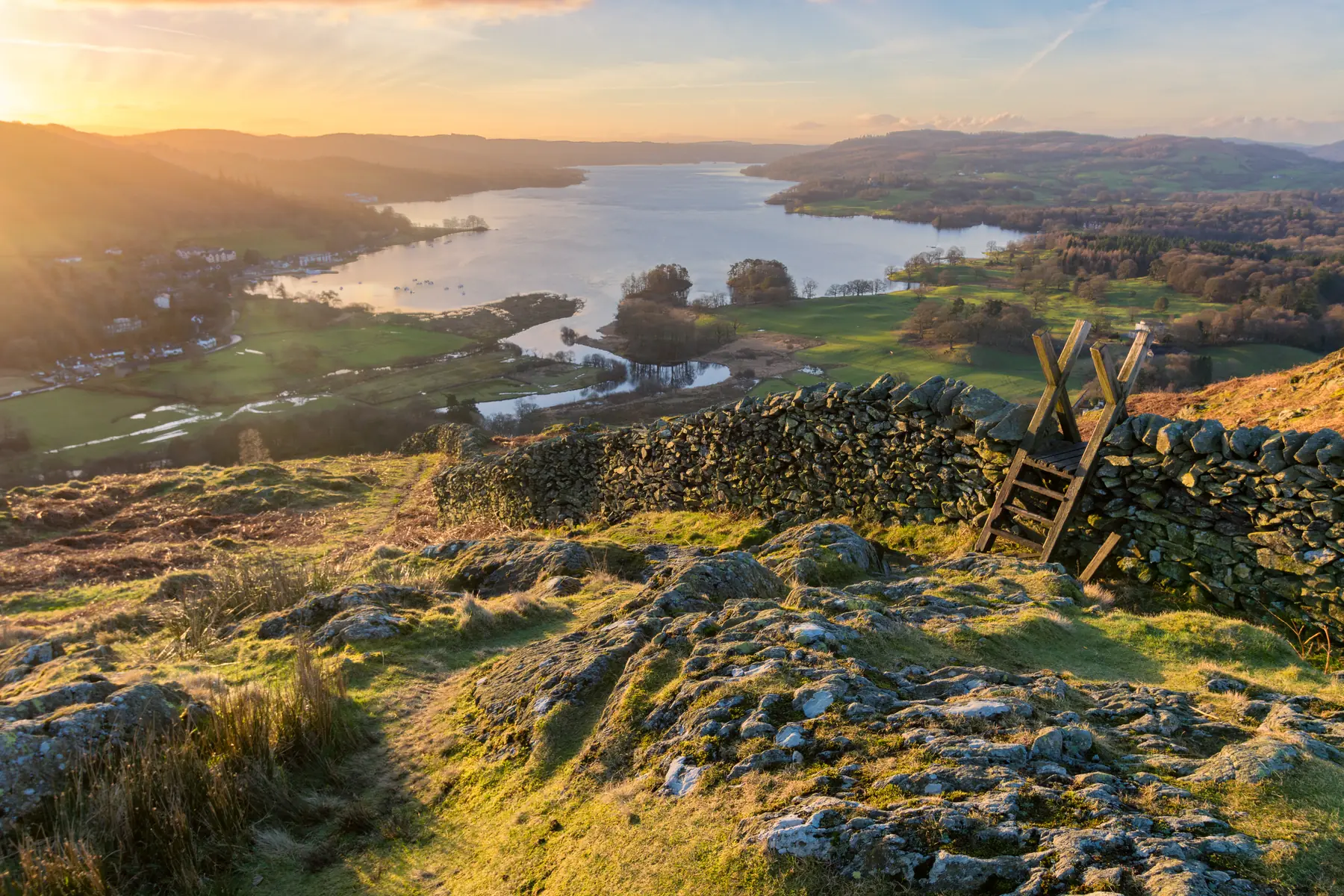
Windermere is eighteen kilometres long, and the single best way to see it is from the water. Boats have been carrying passengers here since 1845, the fleet includes vessels well over a century old, and the modern operation runs year-round from three piers.
The important thing to understand is that these are transport as much as sightseeing. Used properly, the boats connect the town to a waterfall, an aquarium, a steam railway, a national park visitor centre and the quiet western shore — and they turn a car-free stay in the Lake District from an ambition into a plan.
Services run from three main piers and are colour-coded.
Bowness to Ambleside (Waterhead) — north up the lake, about forty minutes, past Brockhole and the wooded eastern shore. Ambleside has Stock Ghyll Force, the Bridge House and the Roman fort at the pier end.
Bowness to Lakeside — south, about forty minutes, to the foot of the lake, where the Lakes Aquarium and the Lakeside and Haverthwaite steam railway are both at the pier.
The island cruise — a short circuit round Belle Isle, the wooded island in the middle of the lake with its round house, taking about forty-five minutes. The easiest option with young children or limited time.
Brockhole is a request stop on the northern route for the national park visitor centre.
Freedom of the Lake tickets allow unlimited travel for a day, which is much the best value if you are hopping.
Part of the pleasure. The fleet mixes modern vessels with genuinely historic ones — the oldest in service dates from the 1890s and several of the larger steamers date from the 1930s, converted from steam but keeping their lines.
They have open top decks and covered saloons, which matters here: the boats run year-round and in most weather, and sitting inside with a coffee watching rain move up the lake and the fells appear and disappear is one of the better things to do in the Lake District in bad conditions.
Only high wind stops them.
This is where the operation is cleverest, and where the value is.
Cruise and steam railway — Bowness to Lakeside by boat, then the Lakeside and Haverthwaite Railway through the Leven valley and back. A boat and a steam train in one ticket.
Cruise and aquarium — the Lakes Aquarium is at the Lakeside pier.
Cruise and Brockhole — the visitor centre with its free grounds and paid activities.
Cruise and the Jetty Museum, and various walking combinations northwards.
Buying these together is cheaper than separately and removes the parking problem entirely, which in Bowness in August is worth a good deal on its own.
You do not have to be a passenger. At Bowness Bay you can hire:
Rowing boats by the hour — cheap, simple, and taking one out towards Belle Isle on a still evening is among the best hours available here.
Motorboats, small and self-drive, with no licence required and a briefing at the jetty.
Kayaks, canoes and paddleboards, from Bowness and from the watersports operators along the shore.
Sailing — Windermere has a long dinghy-sailing tradition and there are schools on the lake.
A note on the water: Windermere has had a ten-knot speed limit since 2005, which ended the era of speedboats and water-skiing here and made it a considerably calmer lake than it was.
A separate and much older thing. The Windermere Ferry is a chain ferry crossing the narrows from Bowness to Far Sawrey — it hauls itself across on cables, takes cars, bikes and foot passengers, and has been running in some form since the fifteenth century.
It costs very little, it takes a few minutes, and it is the quick way to the west shore, Hawkshead, Hill Top and Claife Heights. Going round by road takes the best part of an hour.
Queues for cars build in summer; foot passengers and cyclists walk straight on.
The best trick here, and the reason the timetable is worth studying.
Boat to Ambleside, walk back along the eastern shore, or up Wansfell and down. Boat to Brockhole and walk back to Bowness along the shore, about two hours. Ferry to Far Sawrey and walk Claife Heights, returning on a later crossing. Boat to Lakeside and walk the west shore north, which is a long day and a very good one.
A Freedom of the Lake ticket plus a map is the cheapest way to a week of walking here.
Season. Services run year-round, with a reduced winter timetable. Summer is frequent enough that you can turn up.
Booking. Not usually necessary for the standard cruises, though it is sensible in peak weeks and for the combination tickets.
Parking at Bowness is the constraint, not the boats. Park at Windermere and take the bus down, or come by train.
Dogs travel on the boats.
Accessibility. The main vessels and piers have step-free access; check the specific service when booking.
Wrap up. It is colder on the water than on the shore, in any month.
Worth knowing while you are on one. Passenger boats have run on Windermere since 1845, when the Lady of the Lake began carrying tourists brought by the new railway — which reached Windermere town in 1847 and created the resort more or less overnight.
The Victorian and Edwardian steamers were built to a high standard and several survive: the oldest vessel still in service on the lake dates from the 1890s, and two of the larger ships were built in the 1930s. They were steam-powered originally and have been converted, but the hulls and the lines are as built, which is why they look nothing like a modern ferry.
The Windermere Jetty Museum on Rayrigg Road holds the wider collection — Victorian steam launches, racing motorboats and working craft — and runs trips on a restored steam launch, which is as close as you will get to how the lake sounded in 1900.
About forty minutes each way between Bowness and Ambleside or Bowness and Lakeside; the island cruise is around forty-five minutes in total.
Yes, year-round on a reduced timetable, with covered saloons. Only high wind stops them.
Bowness to Lakeside if you want the aquarium and the steam railway; Bowness to Ambleside if you want a town and a waterfall; the island cruise if time is short.
Yes — rowing boats, small motorboats without a licence, kayaks and paddleboards, all from Bowness Bay.
A chain ferry crossing the narrows from Bowness to Far Sawrey, carrying cars and foot passengers. It is the quick way to the west shore and Hawkshead.